Don't let truck fault codes slow you down. This guide helps truck drivers and technicians diagnose and fix common SPN and FMI codes, with step-by-step troubleshooting and a recommendation for the essential NEXIQ USB LINK 3 diagnostic tool.
Introduction: Decode Your Truck’s Health to Get Back on the Road
For truck drivers and diesel technicians, an illuminated dashboard light or an engine derate isn't just an inconvenience—it’s a signal that something is wrong. Understanding the language of your truck's electronic control modules (ECMs) is the first step toward efficient and accurate repairs. This guide will walk you through the most common truck diagnostic trouble codes (DTCs), including Suspect Parameter Numbers (SPNs) and Failure Mode Identifiers (FMIs), providing the knowledge you need to troubleshoot effectively and get back on the road.
Navigating these complex systems requires a reliable diagnostic tool. We’ll show you why the
NEXIQ USB LINK 3 is the go-to solution for thousands of professionals, providing a seamless interface to decode, diagnose, and resolve critical truck issues.
Understanding Truck Fault Codes: The Language of Your ECM
Modern heavy-duty trucks use a standardized system to communicate issues. The most common protocol is J1939, which uses SPN and FMI codes to pinpoint problems.
Suspect Parameter Number (SPN): This number identifies the specific component or system with the fault. Think of the SPN as telling you what is broken—for example, the engine coolant temperature, exhaust gas recirculation (EGR) valve, or DEF pressure sensor.
Failure Mode Identifier (FMI): This number describes the type of failure. It provides crucial context, such as a "voltage below normal" (FMI 4), "data erratic" (FMI 2), or "mechanical system not responding" (FMI 7).
Together, an SPN and FMI create a precise description of the problem, allowing you to move from general symptoms to specific diagnostic steps.
Common Truck Fault Codes, Diagnostics, and Solutions
Here are some of the most common fault codes you'll encounter, along with their meaning and initial troubleshooting steps.
1. Engine System Faults (SPN 100, 110, 1075)
These codes relate to the heart of your truck—the engine. A malfunction in this system can lead to immediate performance issues or even a shutdown.
SPN 100 FMI 4 (Engine Oil Pressure, Voltage Below Normal):Diagnosis: This indicates low engine oil pressure. This is a critical code that often results in a check engine light and may trigger an engine derate or shutdown.
Troubleshooting:Safely stop the vehicle immediately.
Check the engine oil level. If it's low, top it off.
Inspect the oil pressure sensor and its wiring for any signs of damage or a short circuit.
If the oil level is correct, the issue may be a faulty sensor or a more severe mechanical problem with the oil pump.
SPN 110 FMI 0 (Engine Coolant Temperature High):Diagnosis: The engine is overheating. This is a critical warning and can cause severe engine damage if not addressed quickly.
Troubleshooting:Immediately pull over and shut off the engine.
After the engine cools down, check the coolant level.
Inspect the radiator, fan clutch, and hoses for leaks or damage.
A stuck thermostat or a faulty coolant temperature sensor can also trigger this code.
SPN 1075 FMI 7 (Fuel Priming Pump, Mechanical System Not Responding):
Diagnosis: This code suggests a mechanical issue with the fuel priming pump, which is essential for proper fuel delivery.
Troubleshooting:Check the pump's electrical connector for loose or corroded pins.
Verify the pump's mechanical operation. If it's not responding, the pump itself may need replacement.
Inspect the fuel lines for clogs or air leaks.
2. Aftertreatment and Emissions System Faults (SPN 3719, 3609)
With strict emissions regulations, DPF and SCR system faults are becoming increasingly common. These issues can lead to derates that severely limit vehicle speed and power.
SPN 3719 FMI 0 (DPF Soot Level High, Most Severe):Diagnosis: The Diesel Particulate Filter (DPF) is clogged with soot and requires regeneration.
Troubleshooting:Attempt a parked regeneration. The NEXIQ 3 can initiate this process.
If regeneration fails, inspect the DPF system for other related fault codes (e.g., exhaust pressure or temperature sensor issues).
If the problem persists, the DPF may need to be cleaned or replaced.
SPN 3609 FMI 4 (DOC Inlet Pressure, Voltage Below Normal):Diagnosis: This code points to a problem with the sensor that measures pressure at the Diesel Oxidation Catalyst (DOC). A faulty sensor can provide incorrect data, preventing the system from functioning properly.
Troubleshooting:Inspect the sensor wiring for damage, shorts, or corrosion.
Clean the sensor and verify its proper installation.
If the sensor's voltage is low, it likely needs to be replaced.
The Solution: Why You Need the NEXIQ USB LINK 3
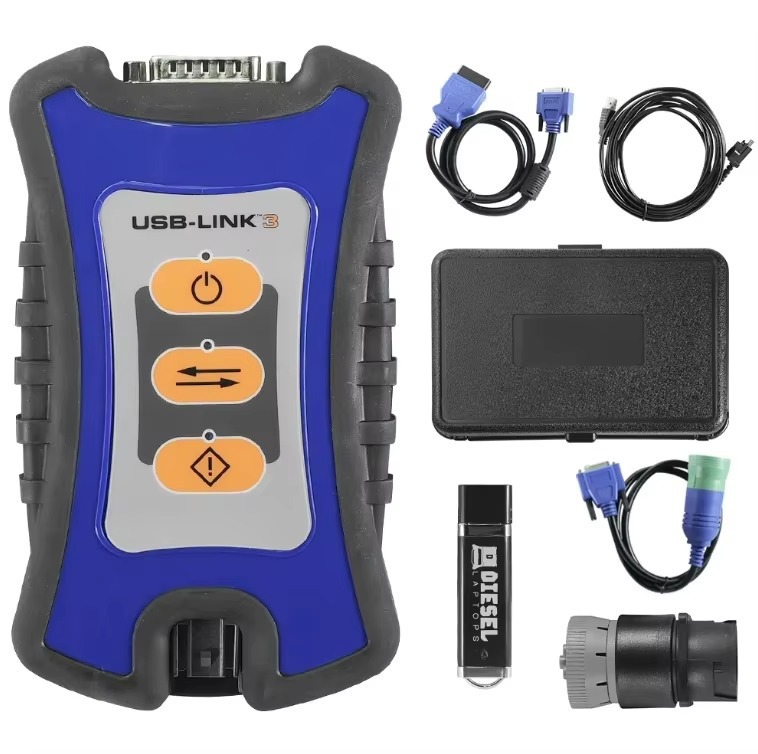
Attempting to diagnose these complex issues without the right tool is like flying blind. A basic code reader may tell you a code exists, but it won't give you the live data, component tests, and bi-directional controls needed for an effective repair.
The
NEXIQ 3 is the industry-leading choice for truck diagnostics, trusted by thousands of technicians. Here's why:
OEM-Level Capabilities: The NEXIQ USB LINK 3 is compatible with a wide range of OEM diagnostic software, giving you dealer-level functionality without the need for multiple tools.
Comprehensive Protocol Support: It supports all major truck protocols, including J1939, J1708, and OBD-II, ensuring it works on virtually any commercial vehicle.
Bi-Directional Controls: This is a game-changer. The tool allows you to perform critical functions like initiating a DPF regeneration, running a cylinder cutout test, or resetting aftertreatment components directly from your laptop.
Live Data & Data Logging: View real-time parameters such as engine RPM, temperatures, and pressures to see how components are performing, helping you catch intermittent issues.
Rugged and Reliable: Built for the demanding workshop environment, the USB LINK 3 provides a secure, reliable connection that stands up to daily use.
Conclusion: Empower Your Workshop with the Right Tools
Effective
truck diagnostics is about more than just reading codes—it's about understanding the entire system to perform a quick and accurate repair. By familiarizing yourself with common SPNs and FMIs and leveraging a powerful tool like the NEXIQ USB LINK 3, you can save time, prevent costly breakdowns, and keep trucks running at peak performance.
Ready to upgrade your diagnostic capabilities? Visit our website at
www.cartooldeal.com to explore our range of tools and get your own NEXIQ USB LINK 3 today.